


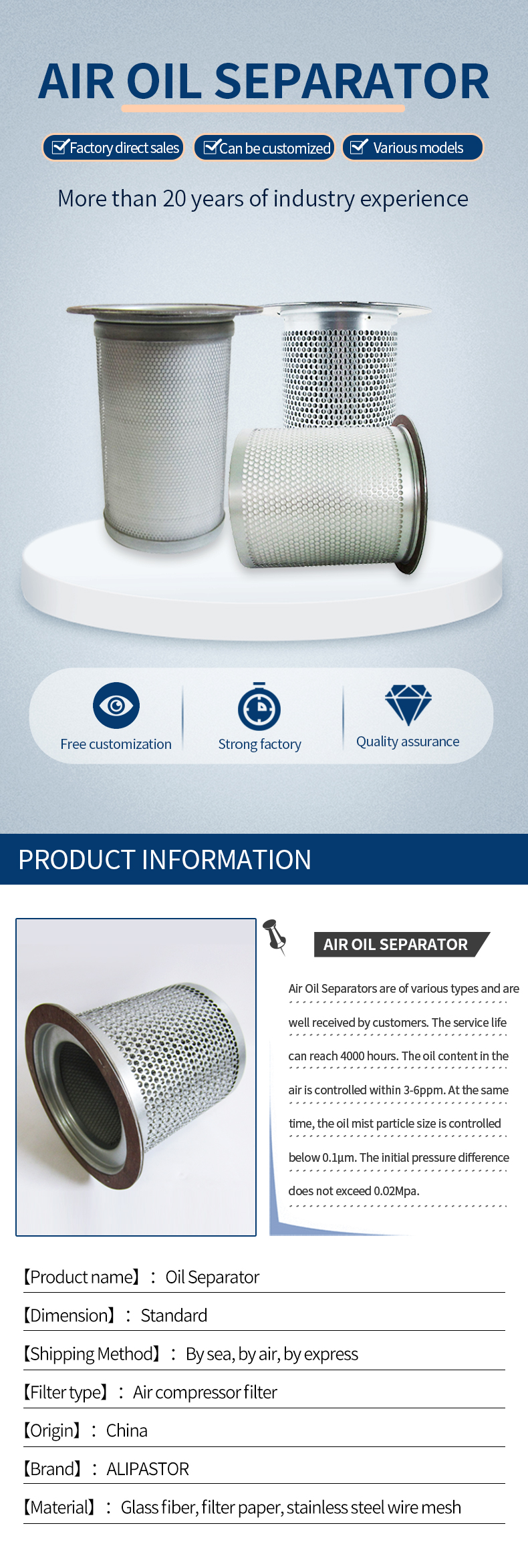
RSC12031 KR1420‑006P RSC1203‑1 IC‑RSC12031‑1 Oil Gas Separator Filter For Chemical Plant Compressor Station
Similar models
RSC12031 KR1420‑006P RSC1203‑1 IC‑RSC12031‑1
Basic Info.
Type | Air Oil Separator | Material | Imported fiberglass |
Warranty | 6 Month | Machinery Test Report | Provided |
Video Outgoing-Inspection | Provided | Place of Origin | Henan, China |
Brand Name | ALIPASTOR | Application | for air compressor |
Product Name | Air Oil Separator | Part Number | RSC12031 KR1420‑006P RSC1203‑1 IC‑RSC12031‑1 |
Keyword | Air Oil Separator | Weight | Standard |
Filtration | 10micron | Color | Customize |
Filtration Grade | 99% | Warranty | 3 Months |
Production Capacity | 1000 PCS/Week |
Product Parameters
Model Number | RSC12031 KR1420‑006P RSC1203‑1 IC‑RSC12031‑1 |
Type | Air Oil Separator element |
Dimension | Standard |
Working Temperature | According to customer's request |
Work Pressure Different | Customized |
Material | Imported fiberglass |
Filter Precision | 10~20μm |
Life span | 2000h |
MOQ | 1 pieces |
Lead Time | Around 5-7 days after order confirmed |
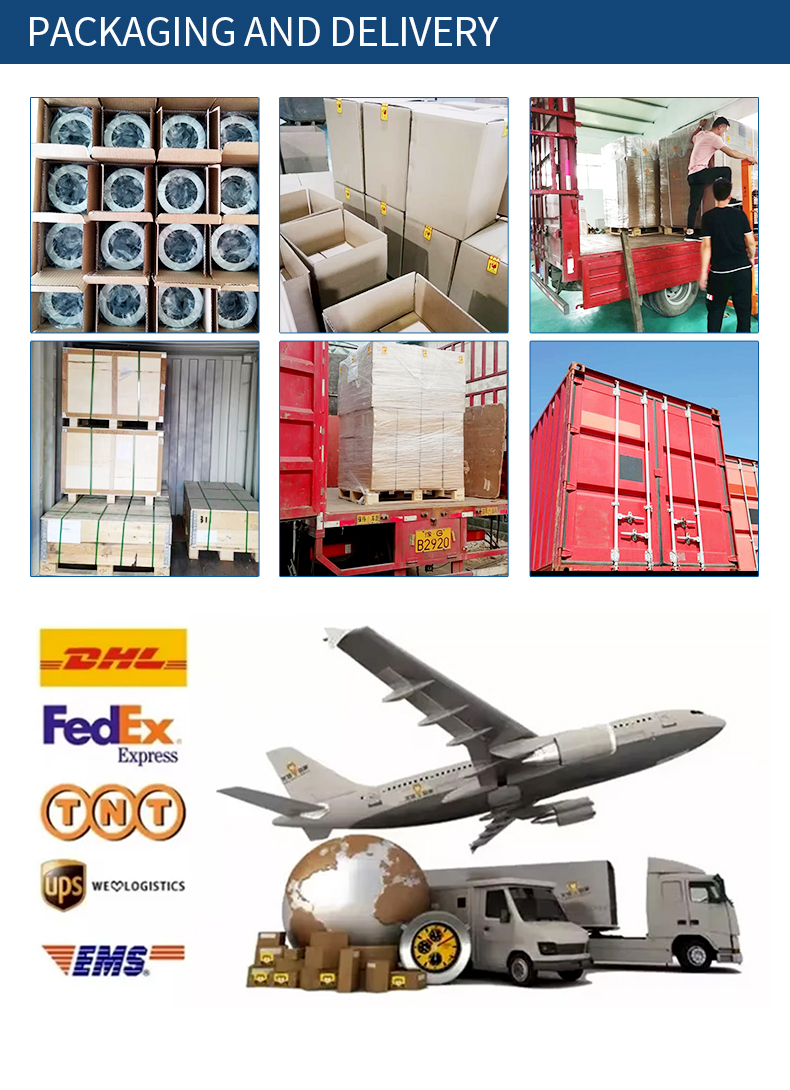
Package | PP bag inside, Inner carton, Export carton outside, or Wooden box as your requirement |
Shipping Method | By sea, by air, by express |
Oil-Gas Separation Filter Element – Models RSC12031 · KR1420-006P · RSC1203-1 · IC-RSC12031-1
Four Interchangeable part numbers for the same high-efficiency oil-gas separation element engineered for oil-flooded rotary screw air compressors and related compressed-air systems. The element performs the final-stage separation of lubricating oil mist from compressed air, ensuring the discharged air meets cleanliness requirements while recovering lubricant for recirculation. All four designations (RSC12031, KR1420-006P, RSC1203-1, IC-RSC12031-1) refer to the same core product platform and are fully interchangeable.
How It Works
The element processes oil-laden compressed air discharged from the compressor block through three sequential mechanisms :
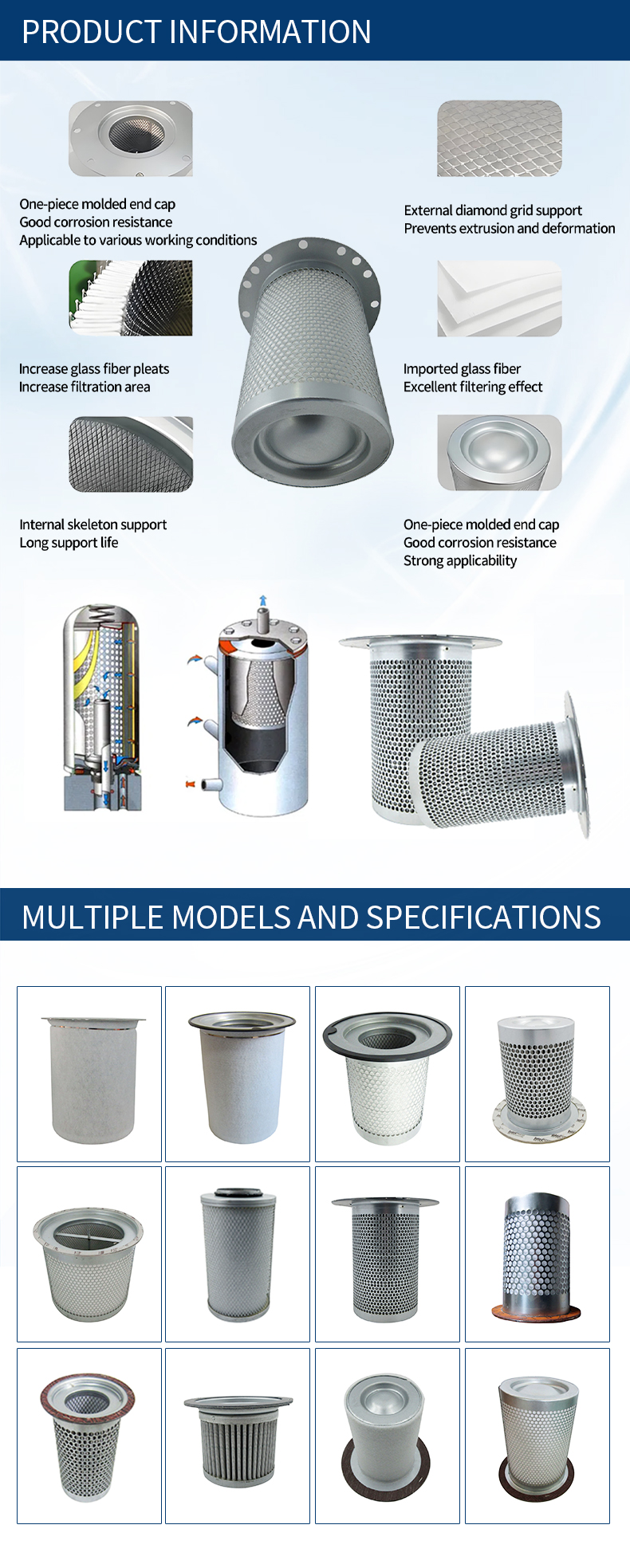
Interception & Diffusion – As the air stream passes through micron-grade glass-fiber media, large oil droplets are directly intercepted; sub-micron droplets undergo Brownian motion and contact the fibers.
Coalescence – Captured droplets collide, merge, and grow into larger oil drops on the media surface.
Gravity Settling & Return – Large drops penetrate the media under aerodynamic and gravitational forces, settle into the bottom groove of the element, and return to the lubrication system via the return line — discharging clean compressed air with extremely low residual oil content (typically ≤ 3 ppm w/w) .
Key Features
Glass-fiber media (alternative: polypropylene fiber or activated carbon fiber) — high temperature resistance, corrosion resistance; glass-fiber is the most widely used media in industrial applications
Filtration accuracy: intercepts 0.01–1 µm particulates
Initial differential pressure ≤ 0.02 MPa
Service life: 3,000–4,500 operating hours under normal conditions (shorten in harsh environments or with poor-quality lubricant)
Compliant with JB/T 10910-2025 – General oil-injected rotary air compressor – Oil-gas separation filter element; supports the industry requirement of ≤ 30 mg/m³ oil carry-over from screw compressors
Electrostatic-dissipative design – anti-static metal pin/copper strip ensures safe operation
Spin-on or bolt-in mounting – gasket sealed; vertical installation in the separator vessel
Technical Specifications
Parameter | Value |
|---|---|
Application | Oil-gas separation in oil-flooded rotary screw air compressors |
Media | Glass-fiber (standard); polypropylene or activated carbon fiber optional |
Filtration Accuracy | 0.01–1 µm |
Residual Oil Content | ≤ 3 ppm w/w (typical) |
Initial ΔP | ≤ 0.02 MPa |
Change-out ΔP | 0.08–0.15 MPa |
Service Life | 3,000–4,500 h (normal duty) |
Flow Direction | Outside → Inside (air); oil returns via bottom drain |
Operating Temperature | Per compressor lubricant specification |
Seal | Nitrile (NBR) standard |
Mounting | Vertical, spin-on or bolt-in per housing |
Interchangeable P/N | RSC12031 = KR1420-006P = RSC1203-1 = IC-RSC12031-1 |
Test Standard | JB/T 10910-2025; ISO 8573-1 (air purity reference) |
📌 Zero differential pressure indicates element rupture or air short-circuit — replace immediately .
Application Guidance
Deployed as the final-stage fine separation element (also called "precision separation") in:
Oil-flooded rotary screw air compressors (22 kW and above typically use internal elements; 7.5–15 kW typically use external spin-on elements)
Vacuum pump oil-mist separation
Hydraulic reservoir breather oil separation
Chemical compressor lubrication oil recovery
Selection criteria :
General pneumatic tools (≤ 10 ppm): standard grade
Textile, chemical (≤ 5 ppm): high-efficiency grade
Food, pharmaceutical, electronics (≤ 3 ppm): ultra-high-efficiency grade
The element's rated flow capacity must be 10–30 % higher than the compressor's nominal displacement . Undersized elements cause high velocity, elevated residual oil, excessive ΔP, and shortened life.
Why Oil-Gas Separation Matters
A failing element triggers five cascading failures :
Clogging → soaring exhaust resistance → surging power consumption — motor load rises, operating current increases
Rupture → excess oil carry-over — contaminates spray painting, pneumatic components, adsorption dryers, and precision downstream filters; causes product defects in food, pharma, electronics, and coating lines
Poor oil return → host overheating trip — accumulated lubricant cannot drain back, oil level rises inside the element, gas entrains more oil, separator tank temperature climbs, triggering high-temperature alarms and frequent shutdowns
Frequent oil make-up — lubricant costs double
Downstream equipment damage — dryers lose effectiveness, precision filters clog rapidly
Matching the correct element and replacing it proactively at the 0.08–0.15 MPa change-out differential pressure is the single most cost-effective maintenance decision for any compressed-air system.
Fluid Compatibility
Mineral compressor lubricants — NBR seal standard
Semi-synthetic and full-synthetic compressor oils — extended service life (semi-synthetic: 3,000–4,000 h; full-synthetic: 6,000–8,000 h)
Not suitable for highly polar fluids or phosphate-ester synthetic lubricants without media customization
Installation & Service
External spin-on element (7.5–15 kW machines) :
Stop the compressor; cool to ambient temperature; open the drain valve to fully release system pressure; verify the pressure gauge reads zero.
Cut main power; tag "Do Not Energize".
Clean the mounting base; remove residual oil and debris.
Use a strap wrench to unscrew the old element counterclockwise (clockwise for reverse-thread models).
Apply a thin film of lubricant to the new gasket; hand-thread until the gasket contacts the base, then tighten ¼–½ turn with a wrench — do not overtighten.
Restore power; test-run; inspect for oil or air leaks.
Internal element (22 kW and above) :
Depressurize and de-energize as above.
Disconnect the minimum pressure valve line, oil return line, and control lines — label each for correct reassembly.
Remove the top cover using a cross-pattern bolt loosening sequence.
Extract the spent element (dispose — never reuse); thoroughly clean the vessel interior and top-cover sealing face.
Place the new element vertically centered in the vessel; apply a thin film of lubricant to the new gasket; ensure the anti-static metal component contacts the vessel wall or cover plate.
Reassemble in reverse order; torque bolts evenly in a cross pattern.
Power on; verify no oil leakage, no air leakage; observe oil level and operating status.
⚠️ Critical: A zero differential pressure reading means the element is ruptured or the airflow is short-circuiting — replace immediately . Monitor ΔP continuously; replace at 0.08–0.15 MPa regardless of elapsed hours. Shorten the interval in dusty, humid, or high-temperature environments, or when lubricant quality is poor .
Quality Assurance
JB/T 10910-2025 – General oil-injected rotary air compressor – Oil-gas separation filter element (issued by the Ministry of Industry and Information Technology, effective November 1, 2025)
ISO 8573-1 – Compressed air purity classes (reference)
Bubble-point integrity test per media specification
Dimensional and gasket compatibility verification against the host separator vessel
Ordering
Specify any one of the interchangeable part numbers — RSC12031 / KR1420-006P / RSC1203-1 / IC-RSC12031-1 — together with:
Host compressor model and rated displacement (element flow capacity must exceed compressor displacement by 10–30 %)
Required residual oil grade: standard (≤ 10 ppm) / high-efficiency (≤ 5 ppm) / ultra-high-efficiency (≤ 3 ppm)
Lubricant type: mineral / semi-synthetic / full-synthetic
Mounting style: spin-on (external) or bolt-in (internal)
Element dimensions (OD, length, thread or flange pattern) — confirm against the existing element
Operating pressure and temperature of the separator vessel
Provide the existing element's dimensions or the host compressor model for cross-reference confirmation. Non-standard legacy vacuum pumps and customized compressors can be measured and manufactured to order — typical lead time 3–7 days.
All values nominal; RSC12031, KR1420-006P, RSC1203-1, and IC-RSC12031-1 are fully interchangeable designations for the same oil-gas separation element platform. Glass-fiber media, 0.01–1 µm filtration accuracy, ≤ 3 ppm w/w residual oil, ≤ 0.02 MPa initial ΔP, 0.08–0.15 MPa change-out ΔP, 3,000–4,500 h service life, compliant with JB/T 10910-2025 . The element intercepts and coalesces oil mist from compressed air, returns lubricant to the system via the drain line, and discharges clean air. Exact dimensional envelope varies by host separator vessel — confirm against your existing element before ordering. Replace proactively at the change-out differential pressure; a zero ΔP reading indicates rupture and requires immediate replacement .





Q2. Is customized filter or OEM available?
A: Yes,just offer your required sepcifications and drawings.
Q3. Can you produce according to the samples?
A: Yes,we can produce by your samples or technical drawings. We can build the molds and fixtures.
Q4.What's the terms of payment?
A: T/T 30% as deposit, and 70% before delivery. We'll show you the photos of the products and packages before you pay the balancing.
Q5.What's your terms of delivery?
A: (1)FOB (2)CFR (3)CIF.
Q6. How about your delivery time?
A: Generally, under MOQ quantity take 5-7 working days after receiving your advance payment. The specific delivery time depends on models and the quantity of your order.
Q7. What's your sample policy?
A: We can supply the sample if we have stock, but the customers have to pay the sample cost and the courier cost at first, and we will refund sample cost in your next order.


