
ERA343H-W Precision Filter | High-Efficiency Air/Gas Filter Element Specs Replacement
What the ERA343H-W Precision Filter Is
The ERA343H-W precision filter is a high-efficiency filtration element used in systems that require consistent removal of fine particles, aerosols, or contaminants from air/gas streams. Depending on the housing and grade, it can serve as:
A HEPA/box-type air filter for HVAC, cleanrooms, hospitals, labs, and electronics manufacturing
A precision gas/compressed-air element for laser cutting, instrumentation, pharmaceuticals, and food/beverage air lines
A final-stage polish filter after pre-filtration to protect sensitive equipment
Its core job is simple: hold a specified micron efficiency while keeping differential pressure low enough to avoid wasting fan/compressor energy.
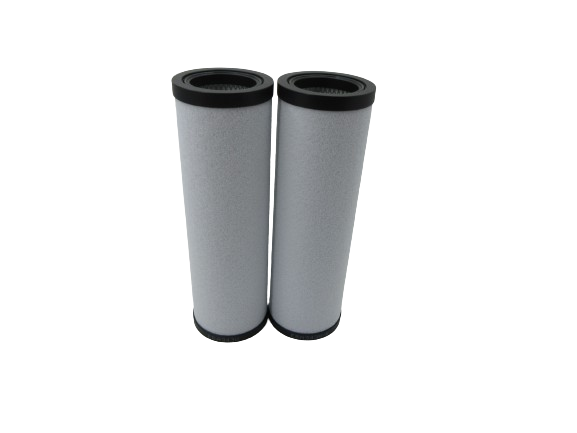
Specs Checklist — Verify Before Ordering
ERA343H-W appears in more than one form factor, so always match the old element and housing plate. Use the table as a verification list, not a fixed single size.
Parameter | Typical range / what to check |
|---|---|
Filtration grade | HEPA-class ≈ 99.97% @ 0.3 µm; gas/precision grades 0.01–100 µm depending on duty |
Media | Ultra-fine glass fiber + polyester (HVAC HEPA); microglass, PP, PTFE, nylon, activated carbon, or sintered SS (gas/liquid precision) |
Box/element size | Box-type listings show ≈ 610 × 610 × 292 mm; cartridge-type must be measured on old element |
Flow rate | Box HVAC listings ≈ 1200–2000 m³/h; compressed-air precision variants depend on housing/model |
Working pressure | HVAC/airbox listings ≈ 0.3–1.2 MPa; compressed-gas precision housings may run up to 3.0 MPa depending on design |
Temperature | HVAC/HEPA listings ≈ -20 to 80°C; general precision media ≈ -10 to 80°C—confirm seal compatibility |
Differential pressure | Replace on housing alarm; HEPA box guidance often ≈ 150 Pa rise, precision-air elements trend by ∆P setpoint |
Seal/frame | Aluminum/plastic frame with gasket for box type; Buna-N/EPDM/Viton for cartridge type—match fluid and temperature |
⚠️ Do not order by “ERA343H-W” alone. Confirm whether you need a rigid HVAC panel/box or a removable cartridge for a pressure vessel—the dimensions, seals, and pressure rating are completely different.
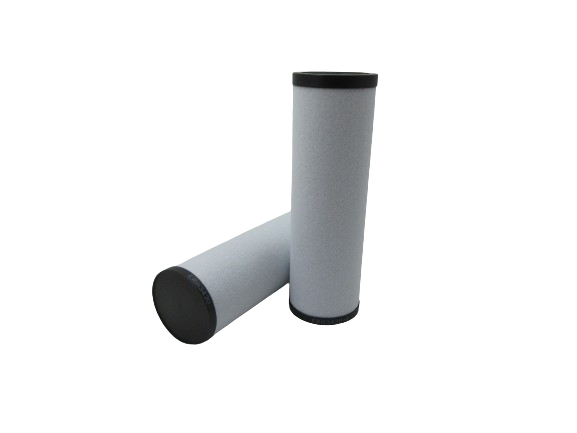
Common Applications
HVAC & commercial buildings — hospitals, offices, airports, laboratories requiring PM2.5/allergen control
Cleanrooms — semiconductor, pharma, optics where ISO Class 5–7 or HEPA H13/H14-level air is required
Compressed air & gas — laser cutting, pneumatic instruments, food packaging, breathing-air support, oil-mist/micro-particle final stage
Industrial ventilation — fumes, fine dust, and process aerosols in factories and power/chemical auxiliaries
If the housing uses a sealed box with frame gasket, it is likely an air-handling/HEPA application. If it uses a threaded/bolted cartridge inside a pressurized filter bowl with ∆P gauge, it is likely a compressed-air/gas precision application.
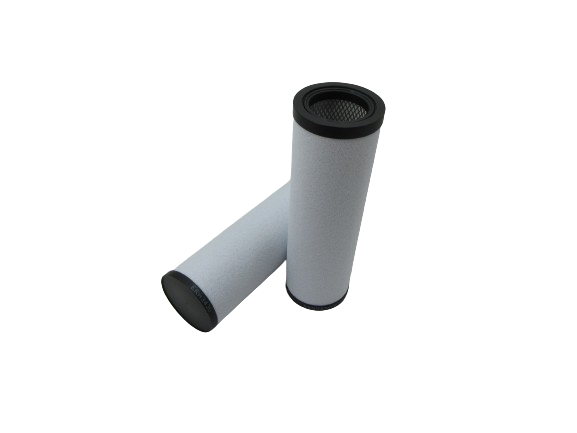
When to Replace
Replace the ERA343H-W element when:
Differential pressure reaches the housing limit — e.g., HEPA box ≈ 150 Pa above clean initial ∆P; precision gas elements at the manufacturer’s ∆P alarm
Downstream quality drops — particle counts rise, laser cuts show dross, instruments drift, cleanroom fails certification
Visual/media damage — torn media, collapsed pleats, water/oil saturation, mold growth in HVAC use
Scheduled service — HEPA/ventilation boxes often 6–12 months depending on pre-filter condition and ambient load; compressed-air precision elements by ∆P hours and oil/water load
📌 Running past ∆P limit forces fans/compressors to work harder and can cause bypass leakage at the frame or seal.
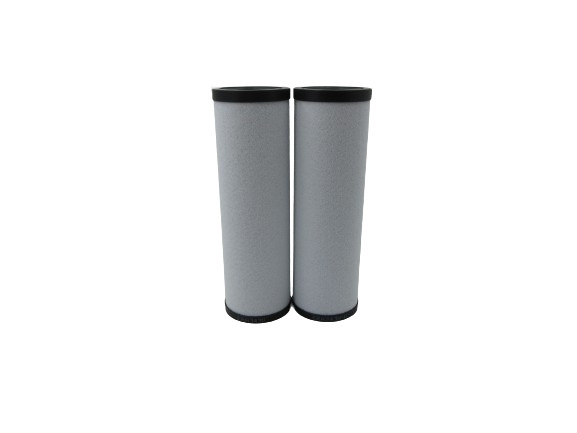
Replacement Steps
A. HVAC / box-type ERA343H-W
Switch off the AHU/fan and lock out power.
Open the filter access section; note old element orientation and airflow arrow.
Remove the used panel/box; vacuum the channel to remove loose dust.
Inspect the frame gasket—replace if cut or compressed.
Seat the new ERA343H-W fully; ensure no gap between frame and housing flange.
Close access door, restore power, and check ∆P across the bank.
B. Cartridge / precision gas-type ERA343H-W
Isolate upstream/downstream valves; depressurize the filter housing to zero.
Drain condensate/oil if the bowl has a drain; open the head or bowl per housing design.
Remove old cartridge; note flow direction and seal positions.
Clean the bore/center tube; check support screen for dents.
Lightly lubricate new seals with compatible lubricant if the housing manual allows.
Fit new element, align flow arrow, reseal, and torque the cap evenly.
Pressurize slowly, check for leaks, and record initial ∆P for future trending.
Selection Tips
Match grade to risk, not to price — general ventilation may not need 0.3 µm HEPA; laser/instrument/pharma air may need sub-micron coalescing/HEPA depending on ISO 8573 or cleanroom class.
Always use pre-filtration — a coarse pre-filter extends ERA343H-W life and keeps final-stage ∆P low.
Confirm seal chemistry — Buna-N for general compressed air, EPDM for wider water/steam-adjacent service, Viton/FKM for aggressive chemicals/high heat; mismatched seals swell or crack.
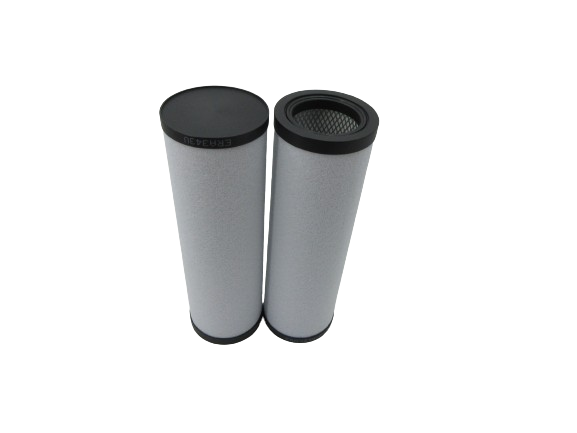
Keep a photo pack — old element top/bottom/side, frame/housing nameplate, micron stamp, gasket material—enough for non-brand cross-reference.
FAQ
Q: Is ERA343H-W a HEPA box or a compressed-air cartridge?
A: It can be listed both ways. Box-type HVAC data shows HEPA-grade glass/polyester at 610×610×292 mm class; precision-gas data under ERA/EDA families shows cartridge elements with microglass/PP/PTFE and higher pressure ratings. Confirm your housing first.
Q: What micron should I choose?
A: For cleanroom/HVAC final filtration, 0.3 µm HEPA-class is common; for compressed-air precision, choose 0.01–0.1 µm for oil mist/sub-micron particles, 1–5 µm for general particulate, and coarser only for pre-stage duty.
Q: Can it be washed and reused?
A: Usually no. HEPA/glass/PP precision elements are disposable; washing destroys media structure and raises bypass risk.
Q: How do I cross ERA343H-W without the original box?
A: Send/have ready: overall dimensions or box size, media type, micron grade, frame/seal material, pressure/temperature rating, flow direction, and housing nameplate. That covers 90% of non-brand matching.


